Skip to content
First Aid Action
  • Group Training
    • First Aid Training for Restaurants, Cafés, and Hospitality Businesses
    • First Aid & Low Voltage Rescue Training for Electrical Contractors
    • First Aid Training Built for Childcare
  • Courses
    • HLTAID011 Provide First Aid
    • HLTAID012 Provide First Aid in an Education and Care Setting
    • HLTAID015 Provide Advanced Resuscitation & Oxygen Therapy
    • HLTAID009 Provide Cardiopulmonary Resuscitation
    • UETDRMP018 Perform Rescue from a Live Low Voltage Panel
  • Public Course Calendar – Come to us!
  • About
  • First Aid VOC
  • Resources
    • First Aid Action Resources
    • Frequently Asked Questions
    • Read our Blogs
    • Webinars for refreshing or learning first aid
    • First Aid Supplies
  • (07) 3901 0599
  • Menu Menu
  • Facebook
  • Instagram
  • Youtube
  • Group Training
    • First Aid Training for Restaurants, Cafés, and Hospitality Businesses
    • First Aid & Low Voltage Rescue Training for Electrical Contractors
    • First Aid Training Built for Childcare
  • Courses
    • HLTAID011 Provide First Aid
    • HLTAID012 Provide First Aid in an Education and Care Setting
    • HLTAID015 Provide Advanced Resuscitation & Oxygen Therapy
    • HLTAID009 Provide Cardiopulmonary Resuscitation
    • UETDRMP018 Perform Rescue from a Live Low Voltage Panel
  • Public Course Calendar – Come to us!
  • About
  • First Aid VOC
  • Resources
    • First Aid Action Resources
    • Frequently Asked Questions
    • Read our Blogs
    • Webinars for refreshing or learning first aid
    • First Aid Supplies
  • (07) 3901 0599

Spinal Injury – when to move and when not to!

28 April 2026/in Blog

Latest update for First Aid Management of Suspected Spinal Injury from ANZCOR (all below information has been obtained from ANZCOR website)
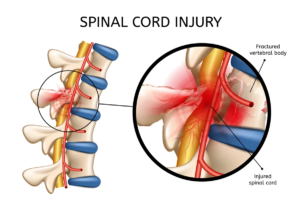
The Australian and New Zealand Committee on Resuscitation (ANZCOR) makes the following recommendations in managing those who have, or may have, a spinal injury [all Good Practice Statements]:

1.      ANZCOR recommends rescuers perform cardiopulmonary resuscitation (CPR) for those who are unresponsive and not breathing normally (ANZCOR Guideline 8). This should continue until ambulance or rescue personnel take over.

2.      ANZCOR recommends that manual inline restriction of motion of the spine be undertaken wherever practicable for possible spinal injury.

3.      ANZCOR recommends that a soft cervical collar only be used to indicate that there is a possibility of spinal injury, and this provides less restriction of motion than manual inline restriction of motion.

4.      ANZCOR recommends that semi-rigid collars be used if manual spinal motion restriction is impossible, and only for extrication/transport for the shortest time possible by providers trained and equipped to use these devices. Appropriate circumstances may include extrication from a mountain.

5.      ANZCOR recommends that long back boards (spinal boards, including proprietary scoops) only be used to move persons provided that this does not significantly slow moving the person and rescuer from danger and only for the time to move the person

6.      ANZCOR notes that head blocks that restrict motion of the head more than the body and frequently increase motion of the cervical spine when the body moves, with the risk of shearing force on the spine, should not be used.

7.      ANZCOR recommends that first aid providers do not rely on spinal motion restriction devices to prevent significant motion of the cervical spine, particularly in the unconscious person.  Manual inline restriction of motion from a neutral position should be used wherever possible.

In a Nut Shell:
Suspected spinal injuries of the neck, particularly if the person is unconscious, pose a dilemma for the rescuer because correct principles of airway management often cause some motion of the cervical spine; however, maintenance of an open airway takes precedence over restriction of motion of the cervical spine, and manual inline restriction of motion minimises this movement.1

Recognize a Spinal Injury:

Symptoms of spinal injury include:

·       pain in the injured region

·       tingling, numbness in the limbs and area below the injury

·       weakness or inability to move the limbs (paralysis)

·       nausea

·       headache or dizziness

·       altered or absent skin sensation.

Signs of spinal injury include:

·       head or neck in an abnormal position

·       signs of an associated head injury

·       altered conscious state

·       breathing difficulties

·       cold and clammy skin

·       change in muscle tone, either flaccid or stiff

·       loss of function in limbs

·       loss of bladder or bowel control

·       priapism (erection in males).

Management

The Conscious Person
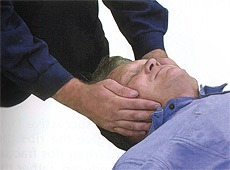
Tell the person to remain still, but do not physically restrain if uncooperative. Those with significant spinal pain will likely have muscle spasm, which splints their injury. Keep the person comfortable until help arrives.

If it is necessary to move the person from danger (e.g. out of the water, off a road), care must be taken to support the injured area and minimise motion of the spine in any direction.

The Unconscious Person
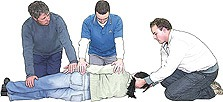
Airway management takes precedence over any suspected spinal injury. It is acceptable to gently move the head into a neutral position to obtain a clear airway. If the person is breathing but remains unconscious, ANZCOR suggests that they be placed in the recovery position (refer to ANZCOR Guideline 3) .

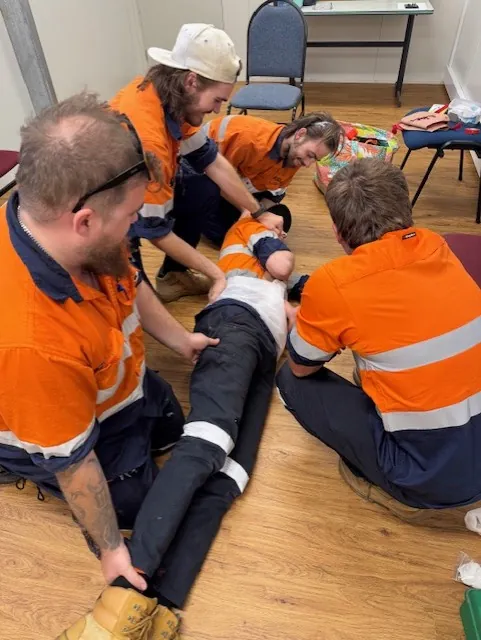
The person should be handled gently with no twisting. Aim to maintain spinal alignment of the head and neck with the torso, both during the turn and afterwards (Spinal Roll). In persons needing airway opening, use manoeuvres which are least likely to result in motion of the cervical spine.  Jaw thrust and chin lift should be tried before head tilt.
Tags: Spinal first aid, prepare for an emergency, take action, learn first aid, learn cpr, Moreton Bay, What to do, emergency, courses, cpr courses, first aid courses, Safety, First Aiders, First Aid Training, CPR, First Aid, CPR Training, Workplace First Aid, First Aid Action, Redcliffe, Brisbane, Ipswich, QLD
https://firstaidaction.qld.edu.au/wp-content/uploads/2025/10/provide-first-aid-04.webp 640 481 Luella Stanley https://firstaidaction.qld.edu.au/wp-content/uploads/2025/06/Logo_Rectangle-removebg-preview-300x136.png Luella Stanley2026-04-28 16:48:472026-04-28 16:49:43Spinal Injury – when to move and when not to!
You might also like
First Aid training is fun!
First Aid action Provide first aid to family friends and workplace First Aid Risks Associated With Flooding
Can you assist with an Asthma Attack?
What is a Log Roll?
Teach your children First Aid!
Have a laugh! Bloopers making videos!
Follow the steps of DRSABCD in an Emergency
FAST – what does this acronym mean?

Pages

  • First Aid Supplies
  • HLTAID011 Provide First Aid Course Brisbane
  • UETDRMP018 Perform Rescue from a Live Low Voltage Panel
  • HLTAID015 Provide Advanced Resuscitation & Oxygen Therapy
  • HLTAID009 Provide Cardiopulmonary Resuscitation
  • HLTAID012 Provide First Aid in an Education and Care Setting
  • HLTAID011 Provide First Aid
  • More
  • Checkout
  • Cart
  • Shop
  • My account
  • Webinars for refreshing or learning first aid
  • First Aid Verification of Competency Service
  • First Aid Courses in Brisbane’s South East
  • First Aid Courses in Brisbane and Surrounds
  • No Show Policy
  • Booking Received
  • Home (8 Web)
  • Home
  • Brisbane First Aid Courses
  • Provide First Aid (HLTAID011)
  • Provide Cardiopulmonary Resuscitation
  • Provide First Aid in an Education and Care Setting (HLTAID012)
  • Perform Rescue from a Live Low Voltage Panel
  • Perform Rescue from a Live LV Panel (UETDRRF004)
  • Provide Advanced Resuscitation & Oxygen Therapy (HLTAID015)
  • First Aid Training for Restaurants, Cafés, and Hospitality Businesses
  • First Aid & Low Voltage Rescue Training for Electrical Contractors
  • First Aid Training Built for Childcare
  • Workplace Group Training
  • Public Course Calendar – Come to us!
  • About
  • First Aid Action Resources
  • Student Resources
  • Read our Blogs
  • Frequently Asked Questions
  • Contact & Make a Booking!
  • Privacy Policy
  • Website Terms of Use

Categories

  • Blog
  • News!
  • Uncategorised

Archive

  • April 2026
  • September 2025
  • August 2025
  • July 2025
  • June 2025
  • May 2025
  • April 2025
  • March 2025
  • February 2025
  • March 2024
  • August 2023

First Aid can save lives

It all starts with an education. Are you ready to take action?

Contact Us Today!
Our Courses:

HLTAID009 Provide Cardiopulmonary Resuscitation (CPR)

HLTAID011 Provide First Aid

UETDRMP018 Perform Rescue from a Live Low Voltage (LV) Panel

HLTAID012 Provide First Aid in an Education and Care Setting

HLTAID015 Provide Advanced Resuscitation & Oxygen Therapy

Our Locations:

We are currently offering first aid courses across Brisbane at the following locations:

  • Tingalpa Uniting Church
  • Brother’s Leagues Club
  • Redcliffe PCYC

Can’t make it to one of our courses? Did you know we offer onsite training where we come to you? Please enquire.

Nationally Recognised Training logo linking to First Aid Action’s certification details on training.gov.au

About Us:

About First Aid Action

FAQs

Contact Us

Refund Policy

Privacy Policy

  • Link to Facebook
  • Link to Instagram
  • Link to Youtube

© 2022 First Aid Action. All Rights Reserved. RTO No. 31668

View our Sitemap

Scroll to top